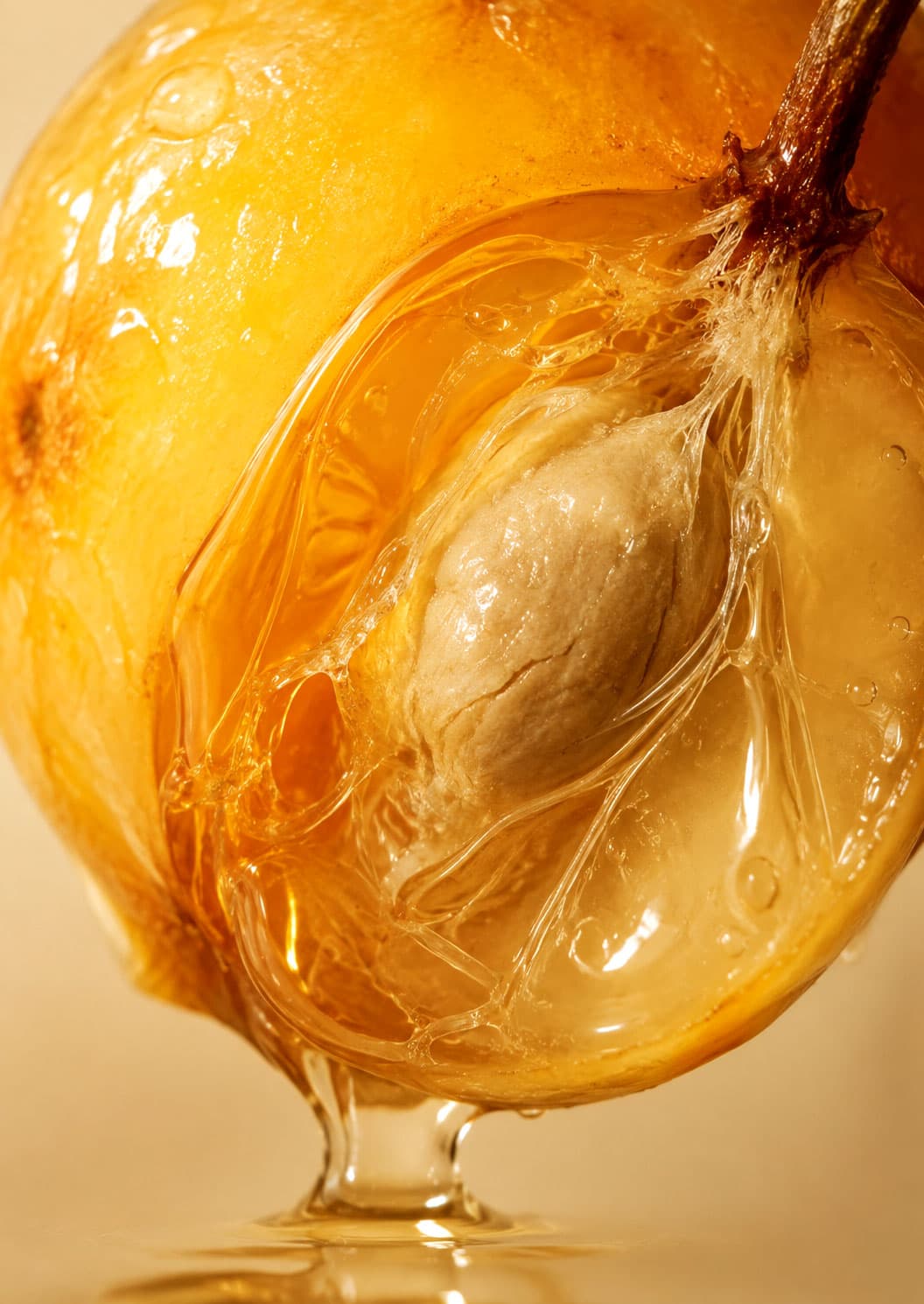
Launching soon. Maru is on its way.

A field guide to resilient beauty

African DesertBotanical Atlas.

Explore the remarkable plants that have adapted to survive Africa’s harshest landscapes, and discover how their unique biology inspires modern skincare.

Researched from botanical references and peer-reviewed studies

Explore the landscape

Select a botanical.

The shaded areas are editorial habitat cues, not precise distribution boundaries. They do not identify where MARU sources ingredients.

Southern Africa

Hover or select a country to explore its featured botanicals.

Boundaries: Natural Earth 1:50m ↗
Southern African botanical explorerAn editorial map of southern Africa. The country outlines and the habitat markers for seven botanicals are keyboard-operable: focus one and press Enter or Space to explore it. The buttons below the map select a botanical as an accessible alternative.ATLANTICINDIAN OCEANAngolaZambiaNamibiaBotswanaZimbabweMalawiMozambiqueSouth AfricaLesothoeSwatiniANGOLAZAMBIANAMIBIABOTSWANAZIMBABWEMALAWIMOZAMBIQUESOUTH AFRICALESOTHOESWATINIKALAHARI BASINMarulaBaobabKalahari MelonXimeniaMongongoHoodiaDevil’s Claw

Woodland survivor

Marula

Sclerocarya birrea

A deciduous tree of seasonally dry African woodlands, with kernels that yield a predominantly oleic seed oil.

Strongest evidence: Human topical study
Where it grows

Marula occurs across a broad belt of sub-Saharan Africa. In southern Africa it is associated with warm, frost-free woodland and bushveld, often on sandy or loamy soils.[1][2]

How it meets the dry season

The tree is deciduous: shedding leaves limits water loss through the cool, dry part of the year. Its range is wider than the Kalahari and should not be reduced to one desert pin.[1][2]

A recorded relationship

SANBI documents extensive food, household and cultural uses of the fruit, bark, wood and kernels. A clinical paper also records traditional topical use of the kernel oil by Zulu people.[1][3]

Inside the seed oil

In the cited study sample, oleic acid made up about 69% of the fatty-acid profile. Composition varies with provenance, harvest and processing, so this is a research value rather than a universal specification.[3]

What that means for skin

A small study found moisturising, hydrating and occlusive effects after topical use, with no irritation observed in its test groups. Promising human evidence, but not proof of a medical outcome.[3]

Field notes

Resilience is not one thing.

A tree shedding its leaves, a vine finishing its life cycle after rain, a seed protecting concentrated oil: each plant answers dryness differently.

01

Marula

Sclerocarya birrea

The tree is deciduous: shedding leaves limits water loss through the cool, dry part of the year. Its range is wider than the Kalahari and should not be reduced to one desert pin.[1][2]

In the cited study sample, oleic acid made up about 69% of the fatty-acid profile. Composition varies with provenance, harvest and processing, so this is a research value rather than a universal specification.[3]

02

Baobab

Adansonia digitata

Its thick, water-rich trunk and leafless dry-season phase are part of a survival strategy suited to low rainfall and intense heat.[4]

Baobab oil contains oleic, linoleic and palmitic acids. Their proportions vary by sample and extraction method; the cited study is a composition reference, not a specification for every baobab oil.[5]

03

Kalahari Melon

Citrullus lanatus

As an annual trailing plant, it completes its life cycle when moisture is available and carries the next generation through dry periods in durable seeds.[6]

Namibian seed-oil samples in the cited study contained roughly 53–57% linoleic acid, alongside oleic and palmitic acids and naturally occurring tocopherols.[7]

04

Ximenia

Ximenia americana

Its shrub-like form, thorny branches and ability to grow in dry woodland and bushland suit exposed, seasonal environments. It is resilient, but not exclusive to true desert.[8]

The cited oil contained oleic acid plus unusual long-chain fatty acids, including ximenic and nervonic acids. This chemistry helps distinguish ximenia from more familiar seed oils.[9]

05

Mongongo

Schinziophyton rautanenii

It is deciduous and rooted in deep, freely draining sand. Established trees tolerate seasonal drought, light frost and fire-prone woodland conditions.[12]

Namibian samples contained roughly 24–36% alpha-eleostearic acid and 31–32% linoleic acid. This unusual conjugated-fatty-acid profile distinguishes mongongo from most familiar cosmetic oils.[13]

06

Hoodia

Hoodia gordonii

Its fleshy, leafless stems store water and reduce leaf-surface water loss. The spines are modified structures, not evidence that Hoodia is a cactus.[15][16]

Research focused on steroidal glycosides and appetite rather than a seed oil or skincare function. Hoodia should not appear in an oil-composition comparison.[18]

07

Devil’s Claw

Harpagophytum procumbens

Above-ground growth disappears during dry periods while a primary storage tuber persists below ground. Secondary tubers hold water and the compounds sought in trade.[20]

The principal analytical markers are iridoid glycosides, especially harpagoside. This is root chemistry, not a fatty-acid seed-oil profile.[21]

Comparative chemistry

Compare African oils.

Five oils, compared without pretending one is universally “best”. Their fatty-acid balance helps explain texture and formulation role; each number traces back to a published sample.

Sort the published sample values to compare the oils. Composition varies with provenance, season and processing, so these are evidence snapshots—not fixed specifications for every harvest.

OilAbsorptionRichnessOleicLinoleicFormulation character
BaobabAdansonia digitataMediumRich37%29%Conditioning, supple feel
Kalahari MelonCitrullus lanatusFastLight36.7%51.4%Lightweight barrier-supporting blends
MarulaSclerocarya birreaMedium-fastRich69%9.2%Cushioned nourishment
MongongoSchinziophyton rautaneniiMedium-fastBalanced17%31.5%Protective-feeling emollience
XimeniaXimenia americanaSlowRich31.82%Persistent softness and glide

“Absorption”, “richness” and formulation character are editorial sensory categories, not clinical measurements. Open each profile for sample methods and references.

Ingredient relationships

Follow the connections.

Shared landscapes create different survival strategies—and different questions about people, wildlife, trade, chemistry and evidence.

Botanical relationship map

Choose a botanical to trace its ecological, chemical and cultural connections.

Selected Direct connection

How to read this Atlas

Method before mythology.

We use botanical institutions for distribution and habitat, and peer-reviewed papers for chemistry or tested effects. Traditional use is described only where a source ties it to a place or people.

A fatty-acid profile can explain why an oil is useful in formulation. It cannot, by itself, prove a skincare outcome. Laboratory findings are not presented as human clinical evidence.

Editorial note

Last reviewed 21 July 2026. The Atlas will evolve as stronger botanical or human evidence becomes available.

Suggested citation

Maru Skincare™ (2026). African Desert Botanical Atlas. Reviewed 21 July 2026.

Permanent page link ↗

Sources

25 references
  1. 1Sclerocarya birreaSouth African National Biodiversity Institute · Botanical reference
  2. 2Sclerocarya birrea (A.Rich.) Hochst.Kew Science — Plants of the World Online · Botanical reference
  3. 3Safety and efficacy of Sclerocarya birrea (Marula) oil: a clinical perspectiveJournal of Ethnopharmacology, via PubMed · Peer-reviewed research
  4. 4Adansonia digitataSouth African National Biodiversity Institute · Botanical reference
  5. 5A sustainable approach to extracting baobab oil: neat supercritical CO₂ optimizationRSC Advances, via PubMed · Peer-reviewed research
  6. 6Citrullus lanatus (Thunb.) Matsum. & NakaiKew Science — Plants of the World Online · Botanical reference
  7. 7Characterization of Acanthosicyos horridus and Citrullus lanatus seed oilsFoods, via PubMed Central · Peer-reviewed research
  8. 8Ximenia americana L.Kew Science — Plants of the World Online · Botanical reference
  9. 9An overview on the properties of Ximenia oil used as cosmetic in AngolaBiomolecules, via PubMed · Peer-reviewed research
  10. 101:50m Admin 0 — CountriesNatural Earth · Cartographic data
  11. 11Schinziophyton rautanenii (Schinz) Radcl.-Sm.Kew Science — Plants of the World Online · Botanical reference
  12. 12Schinziophyton rautaneniiPROTA, via Pl@ntUse · Botanical reference
  13. 13Characterization of Schinziophyton rautanenii nut oil from NamibiaJournal of Food Composition and Analysis · Peer-reviewed research
  14. 14Contribution of Schinziophyton rautanenii to sustainable diets and livelihoodsSustainability · Peer-reviewed research
  15. 15Hoodia gordonii (Masson) Sweet ex Decne.Kew Science — Plants of the World Online · Botanical reference
  16. 16Hoodia gordoniiSouth African National Biodiversity Institute · Botanical reference
  17. 17Information document on trade in Hoodia speciesSouth African National Biodiversity Institute · Botanical reference
  18. 18Effects of 15-day repeated consumption of Hoodia gordonii extractAmerican Journal of Clinical Nutrition · Peer-reviewed research
  19. 19Harpagophytum procumbens (Burch.) DC.Kew Science — Plants of the World Online · Botanical reference
  20. 20Harpagophytum procumbensSouth African National Biodiversity Institute · Botanical reference
  21. 21Harpagophyti radix — European Union herbal assessmentEuropean Medicines Agency · Regulatory assessment
  22. 22National policy on the utilization of Devil’s Claw productsGovernment of the Republic of Namibia · Government policy
  23. 23Adansonia digitata — Ecocrop datasheetFood and Agriculture Organization of the United Nations · Botanical reference
  24. 24The topical efficacy and safety of Citrullus lanatus seed oilSouth African Journal of Botany · Peer-reviewed research
  25. 25Sclerocarya birrea monographUK Department for International Development research archive · Botanical reference

From landscape to ritual

Meet the oils in full.

Continue into MARU’s ingredient library for complete cosmetic guides, practical FAQs and the products that bring these seed oils together.

Explore the ingredient library