Rainfall
200–1,600 mm/yr
Broad reported growing envelope

Sclerocarya birrea
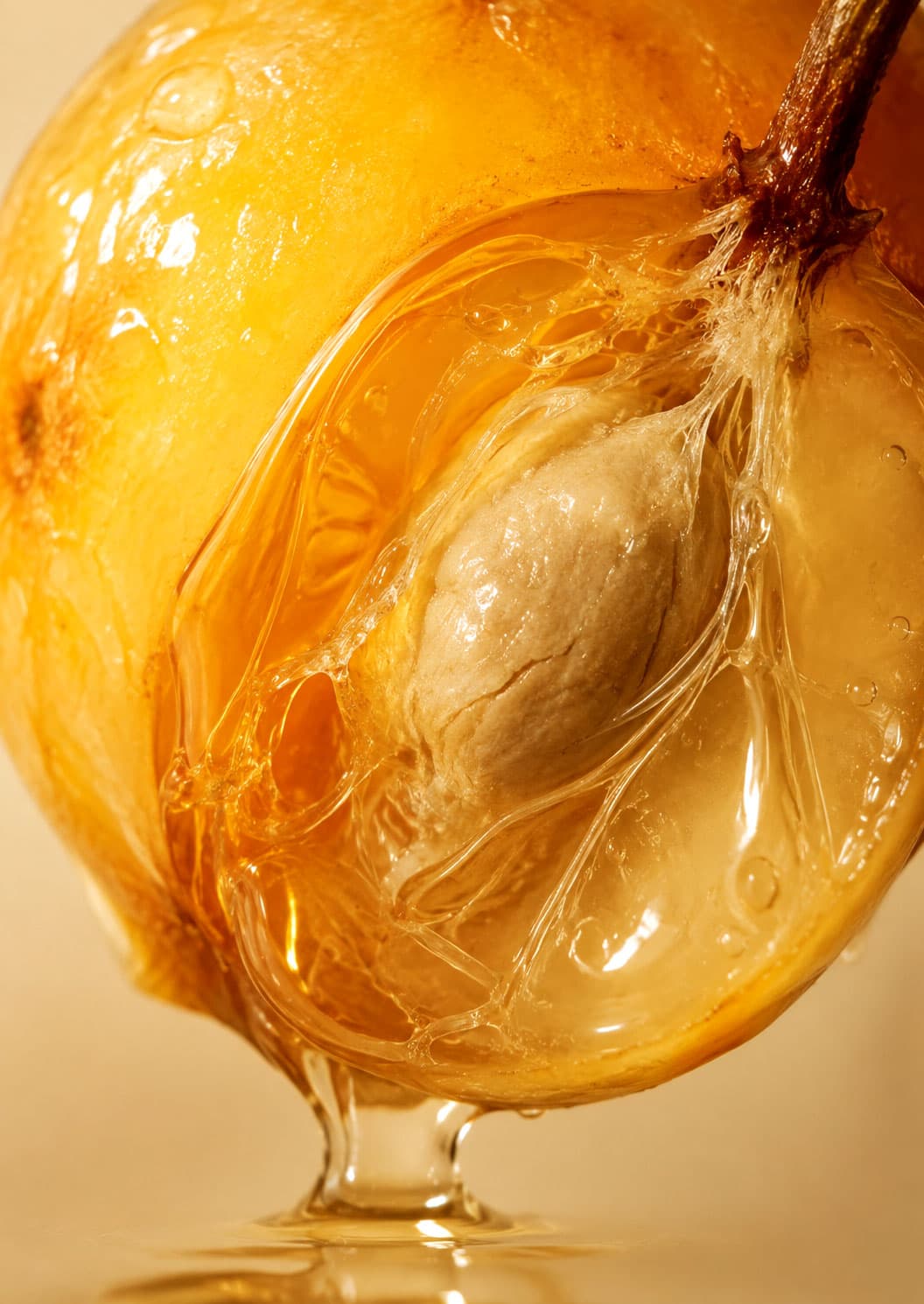
A warm-woodland tree whose fruit connects seasonal ecology, food culture, wildlife and one of southern Africa’s best-studied cosmetic seed oils.
Family · Anacardiaceae
Climate
Rainfall
200–1,600 mm/yr
Broad reported growing envelope
Temperature
19–35°C
Reported mean annual range
Altitude
Low–middle elevations
Warm woodland; local high-altitude records occur
These values describe a broad species envelope, not the conditions at a particular MARU supply site.[1][3]
Harvest season
In southern Africa, ripe fruit is commonly collected from the ground during summer into early autumn. Timing shifts with latitude, rainfall and local population; a single continent-wide harvest month would be misleading.[1]
Sustainability
Marula is widespread, but sustainable trade still depends on regeneration, secure community access, careful kernel processing and benefit distribution. Species-wide abundance does not prove that every supply chain is equitable.[1]
Chemical composition
Values are from the oil used in one published study. Provenance, season and processing can change an oil profile.[4]
Wildlife interactions
Fallen marula fruit is eaten by elephants and other mammals. Animals move fruit and stones, but popular stories about deliberately intoxicated elephants are not needed to explain the ecological relationship.[1]
Leaf fall reduces water loss through the dry season; flowers and new leaves return before or around the rains, reconnecting the tree with insects and browsers.[1]
Traditional relationships
SANBI records food, beverage, household, medicinal and cultural relationships with marula fruit, bark, wood and kernels across the region.[1]
The cited clinical paper notes ethnobotanical records of Zulu use of the oil for maintaining healthy skin. It should not be generalised to every southern African community.[4]
The profile helps explain marula oil’s rich slip and value for dry-feeling skin. Fatty acids can explain formulation behaviour; they do not by themselves prove a clinical benefit.[4]
The cited study recruited 20 healthy women per test and reported non-irritancy plus moisturising, hydrating and occlusive effects. It is relevant human evidence, but still a small, short study rather than a universal treatment claim.[4]
References
Reviewed 21 July 2026. Botanical ranges and research conclusions may change as records improve.
Cite this page
Maru Skincare™ (2026). Marula (Sclerocarya birrea). African Desert Botanical Atlas. Reviewed 21 July 2026.
https://maruskincare.com/za/botanical-atlas/marula
Permanent page link ↗From the Atlas to the bottle
This botanical is part of the Maru range. Read how the ingredient behaves on skin, or explore the body oils it lives in.