Rainfall
Seasonally dry tropics
Kew places the species in the seasonally dry tropical biome

Ricinus communis
An African native that travelled the world, came home as a naturalised plant, and carries an oil built almost entirely from one unusual fatty acid.
Family · Euphorbiaceae
Native to north-east tropical Africa and naturalised across southern Africa, where South Africa lists it as an invasive species. Not a desert botanical; the map shows where it now grows wild.
Distribution
Kew records the species as native to north-east tropical Africa, well outside this map. Across southern Africa it is naturalised in disturbed ground and along rivers, and regional floras record it in every highlighted country. These are naturalised records, not a native range and not a sourcing map.[1][2][3]
Climate
Rainfall
Seasonally dry tropics
Kew places the species in the seasonally dry tropical biome
Temperature
Warm, frost-tender
Optimal growth is reported around 20 to 25°C
Altitude
Lowlands to plateau
Riverbeds, roadsides and forest edges rather than a fixed elevation band
A naturalised plant follows disturbance more than climate. These cues describe where it establishes, not where it evolved.[1][2][3][5]
Harvest season
Castor sets seed through the warm season in spiny capsules and spreads readily along rivers, roadsides and forest edges. Commercial oil comes from farmed crops: India dominates world production, and Mozambique, a highlighted country on this map, is one of the largest growers after it.[2][5][8]
Sustainability
Castor oil in commerce is a farmed crop, led by India, with Mozambique among the largest producers. Wild stands along southern African rivers are an ecological story, not a supply one. MARU's castor oil is a minor, sourced ingredient; the Atlas does not map its origin.[5][8]
Wildlife interactions
Regional floras record castor in disturbed places, sandy riverbeds and riverine vegetation, the habitats where it competes with native plants. Its ecological role in southern Africa is that of a naturalised coloniser.[2][3]
South Africa's 2020 Alien and Invasive Species Lists place Ricinus communis in Category 2, meaning it may be grown only under permit.[4]
Traditional relationships
A recent review records castor oil applied to wounds, burns and skin complaints and rubbed into aching joints, and crushed bark applied to wounds, in African traditional medicine. These are recorded practices, not evidence of efficacy.[6]
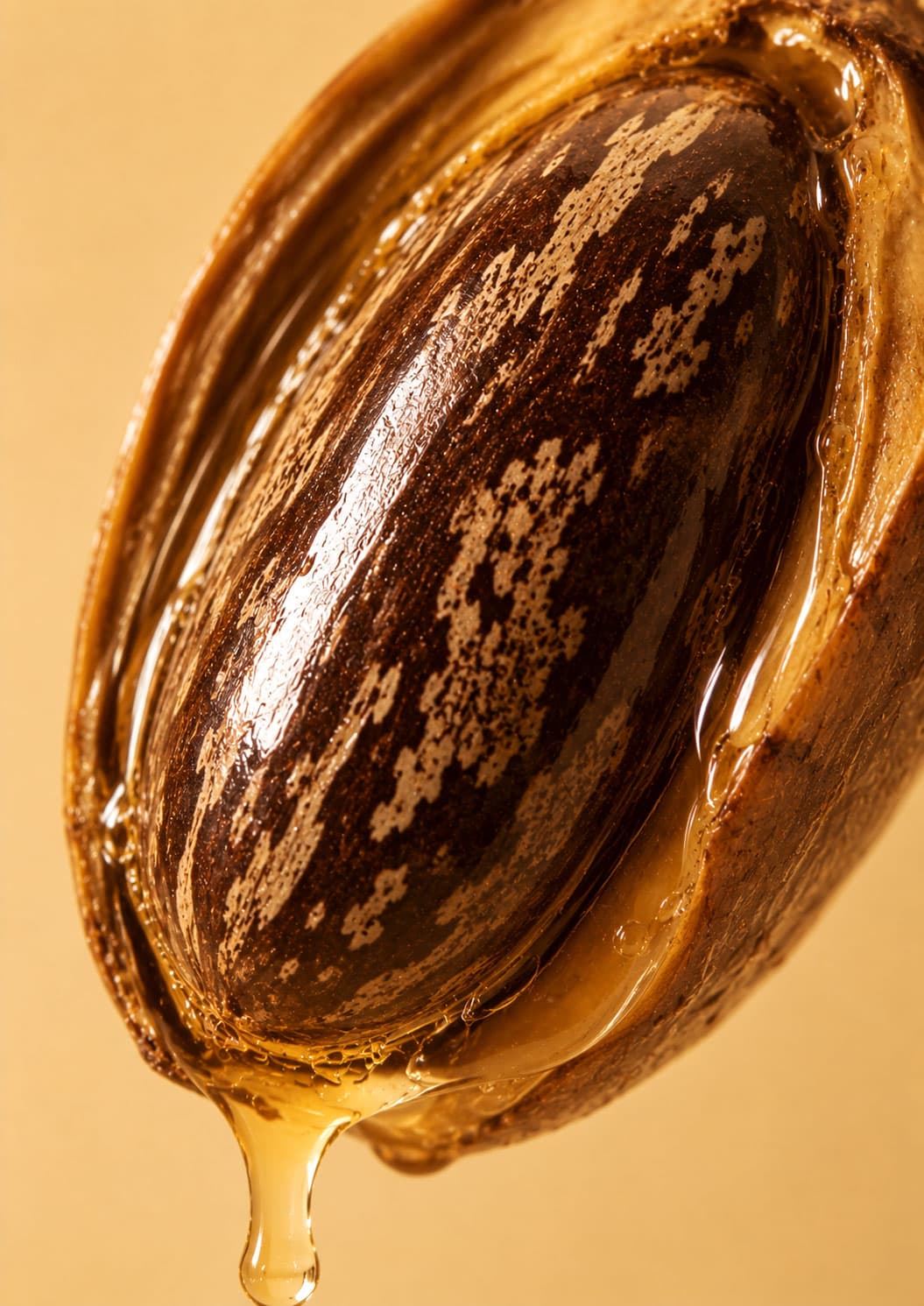
The seeds contain ricin and are dangerously toxic if eaten. The oil is free of ricin because the toxin does not partition into it during pressing, a distinction every traditional and modern use depends on.[7][6]
The hydroxyl group on ricinoleic acid makes castor oil far thicker and more cushioning than the other oils in this Atlas. In a blend it adds body and slip at low levels; it is a texture contributor, not the active ingredient.[5]
The Cosmetic Ingredient Review concluded castor seed oil is safe as used in cosmetics, not a significant irritant or sensitiser in human tests, and free of ricin. Reactions in people with occupational dermatoses are the caveat. The Atlas cites no efficacy trial.[7]
References
Reviewed 19 September 2026. Botanical ranges and research conclusions may change as records improve.
Cite this page
Maru Skincare™ (2026). Castor (Ricinus communis). African Desert Botanical Atlas. Reviewed 19 September 2026.
https://maruskincare.com/za/botanical-atlas/castor
Permanent page link ↗From the Atlas to the bottle
This botanical is part of the Maru range. Explore the body oils it lives in.
Connected botanicals