Rainfall
Low, strongly seasonal
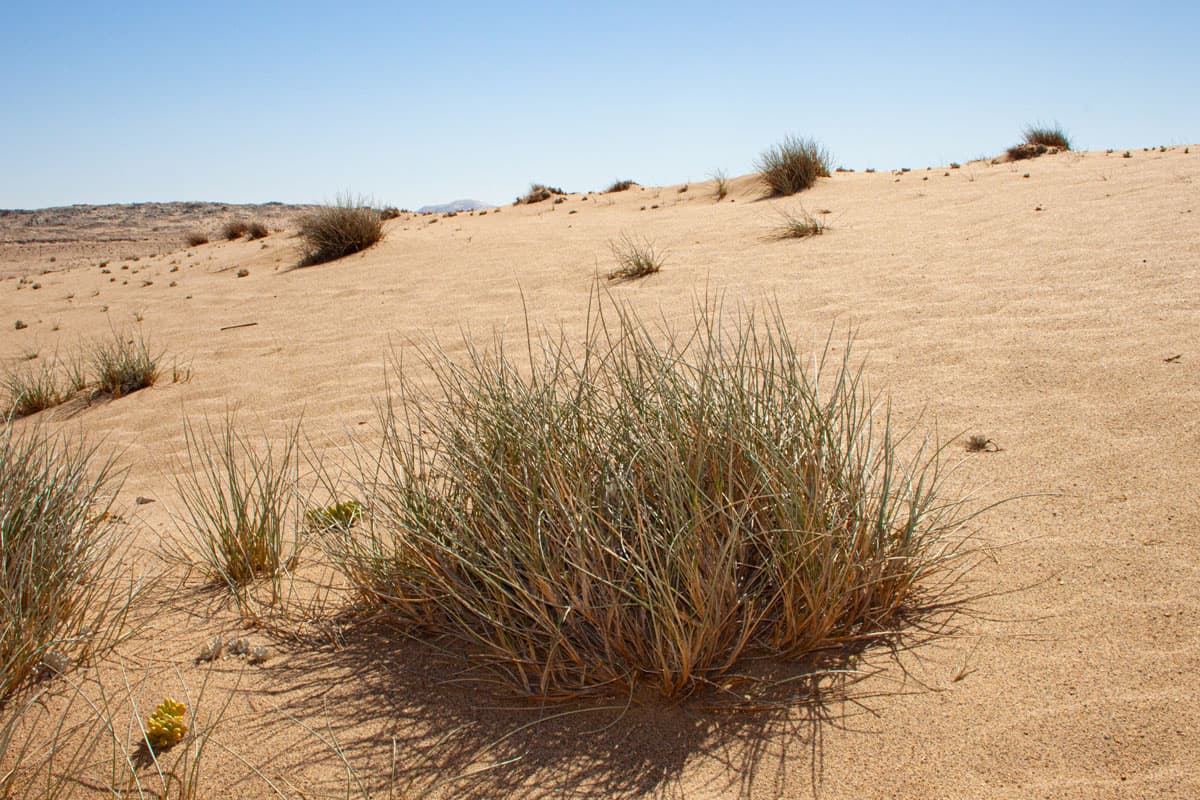
Kalahari dryland habitat

Harpagophytum procumbens
A Kalahari plant whose hooked fruits travel on animals and whose secondary roots connect medicinal trade with difficult questions of wild harvest.
Family · Pedaliaceae
Included for botanical education. This plant is not used in MARU formulations.
Climate
Rainfall
Low, strongly seasonal
Kalahari dryland habitat
Temperature
Hot growing season
Dormant through dry or cold periods
Altitude
Interior sandveld
Local populations vary; no single cited envelope
The underground storage system and deep sand are more biologically meaningful than an unsupported continent-wide average.[1][2]
Harvest season
Trade uses dried secondary tubers. Sustainable practice leaves the primary tuber in place and closes the excavation so the plant can recover; SANBI notes cultivated plants may take about four years to first harvest.[2][4]
Sustainability
Removing secondary tubers carefully can allow recovery; damaging the primary tuber can kill the plant. Namibia regulates harvesting, dealing and export because ecological and livelihood outcomes depend on traceable practice.[4][2]
Chemical composition
The medicinal material is dried secondary root, so an oil-style fatty-acid chart would be scientifically inappropriate.[3]
Wildlife interactions
Hooked fruits catch in fur and around hooves, carrying seeds away from the parent plant. The same hooks can injure or inconvenience animals.[1]
Devil’s Claw is included for ecology, medicinal-history and sustainability education. MARU does not use it, and oral medicinal evidence cannot be converted into a cosmetic skin claim.[3]
The EMA recognises traditional oral use and notes that clinical studies are difficult to compare and insufficient for firm conclusions. None of that establishes topical cosmetic efficacy.[3]
References
Reviewed 21 July 2026. Botanical ranges and research conclusions may change as records improve.
Cite this page
Maru Skincare™ (2026). Devil’s Claw (Harpagophytum procumbens). African Desert Botanical Atlas. Reviewed 21 July 2026.
https://maruskincare.com/za/botanical-atlas/devils-claw
Permanent page link ↗Connected botanicals