Field notes
Resilience is not one thing.
A tree shedding its leaves, a vine finishing its life cycle after rain, a seed protecting concentrated oil: each plant answers dryness differently.
01
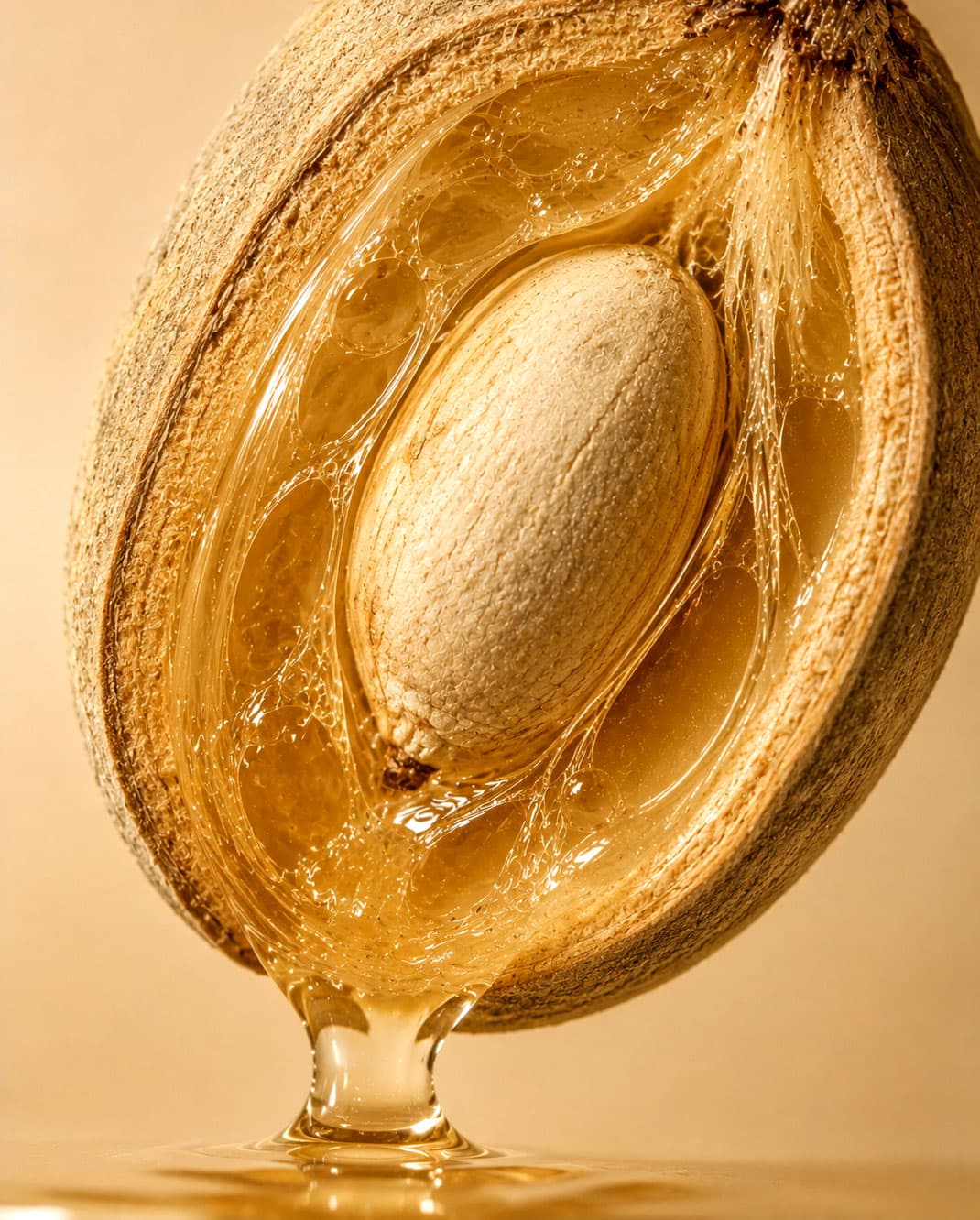
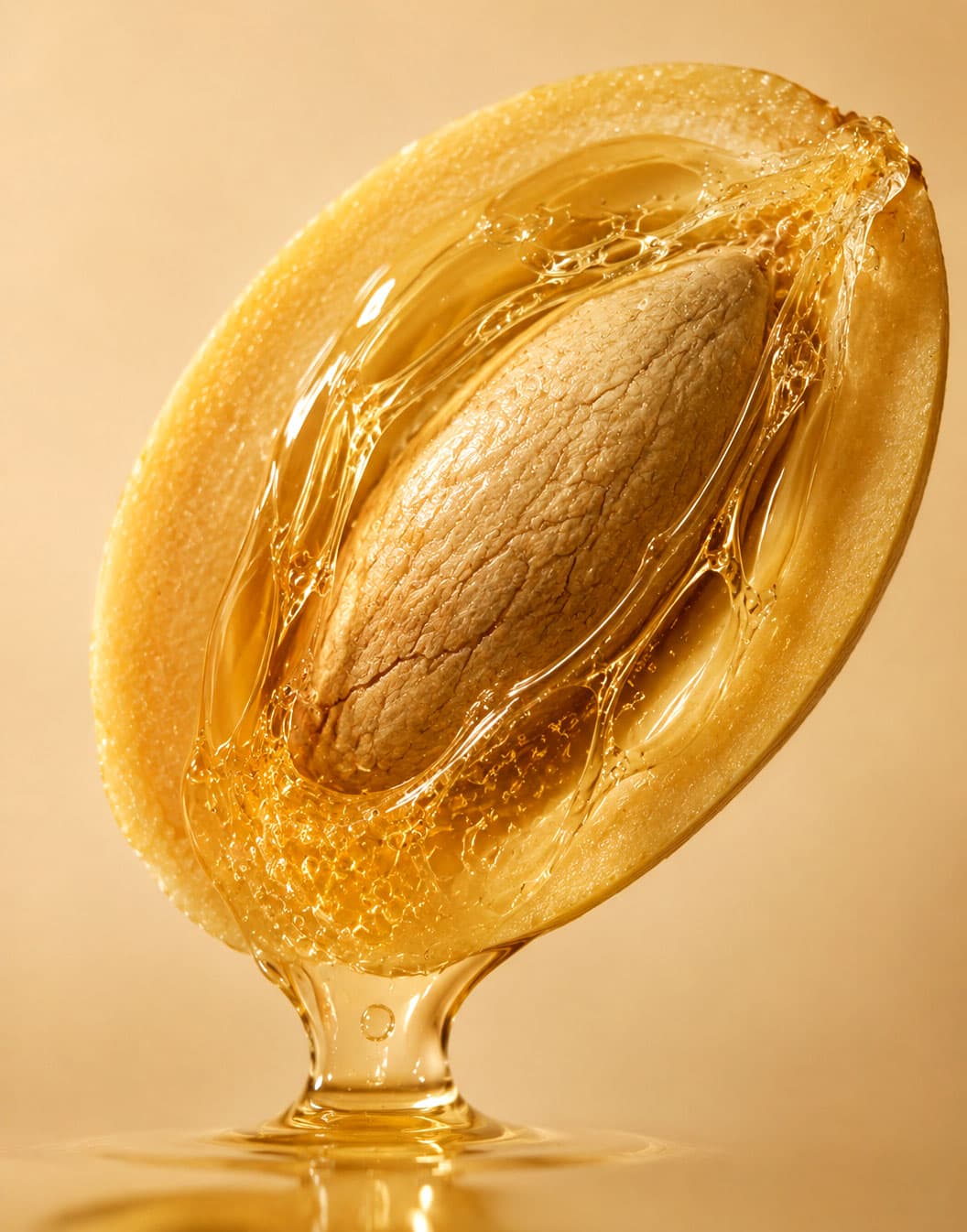
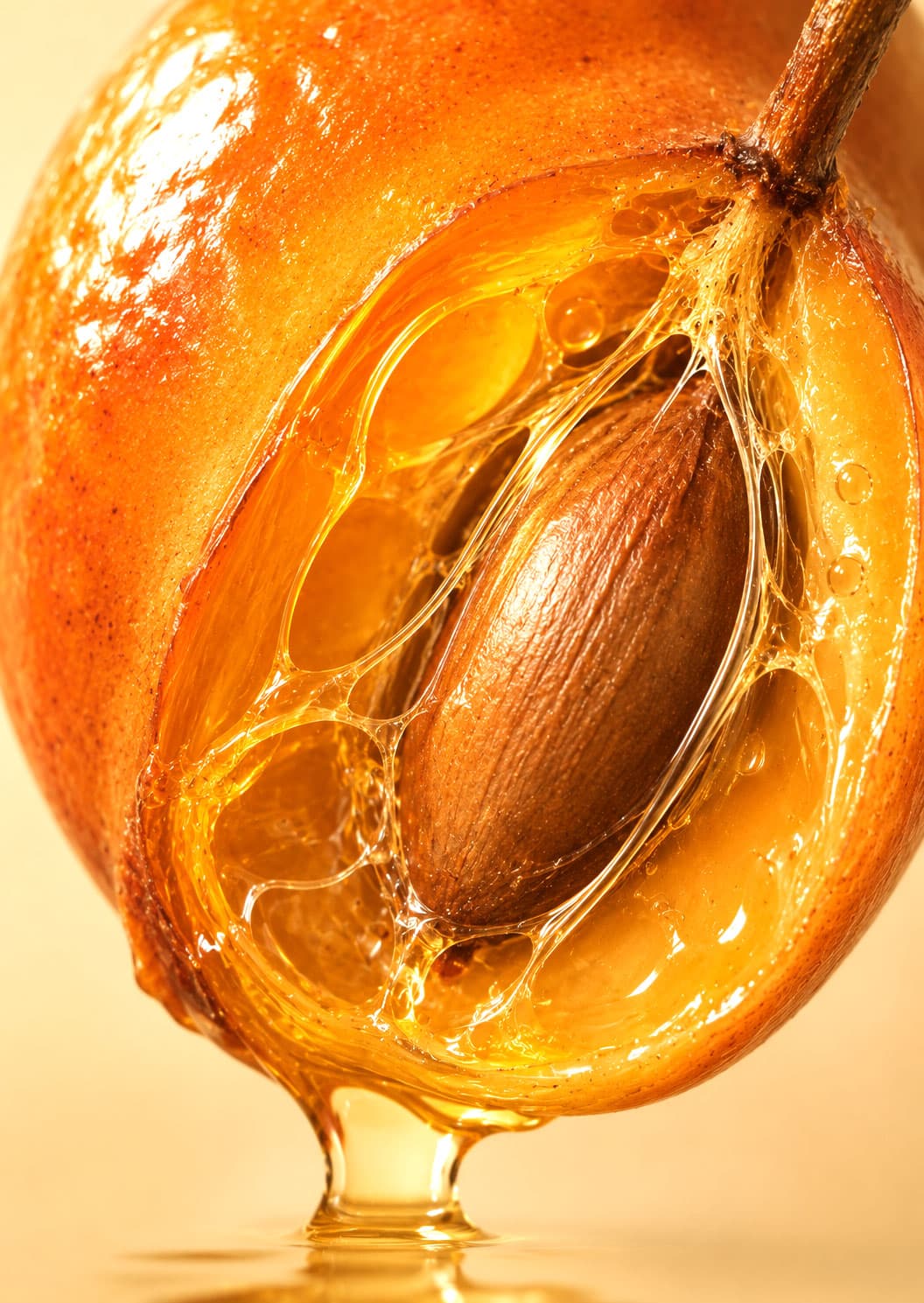
Marula
Sclerocarya birrea
The tree is deciduous: shedding leaves limits water loss through the cool, dry part of the year. Its range is wider than the Kalahari and should not be reduced to one desert pin.[1][2]
In the cited study sample, oleic acid made up about 69% of the fatty-acid profile. Composition varies with provenance, harvest and processing, so this is a research value rather than a universal specification.[3]
02
Baobab
Adansonia digitata
Its thick, water-rich trunk and leafless dry-season phase are part of a survival strategy suited to low rainfall and intense heat.[4]
Baobab oil contains oleic, linoleic and palmitic acids. Their proportions vary by sample and extraction method; the cited study is a composition reference, not a specification for every baobab oil.[5]
03
Kalahari Melon
Citrullus lanatus
As an annual trailing plant, it completes its life cycle when moisture is available and carries the next generation through dry periods in durable seeds.[6]
Namibian seed-oil samples in the cited study contained roughly 53–57% linoleic acid, alongside oleic and palmitic acids and naturally occurring tocopherols.[7]
04
Ximenia
Ximenia americana
Its shrub-like form, thorny branches and ability to grow in dry woodland and bushland suit exposed, seasonal environments. It is resilient, but not exclusive to true desert.[8]
The cited oil contained oleic acid plus unusual long-chain fatty acids, including ximenic and nervonic acids. This chemistry helps distinguish ximenia from more familiar seed oils.[9]
05
Mongongo
Schinziophyton rautanenii
It is deciduous and rooted in deep, freely draining sand. Established trees tolerate seasonal drought, light frost and fire-prone woodland conditions.[12]
Namibian samples contained roughly 24–36% alpha-eleostearic acid and 31–32% linoleic acid. This unusual conjugated-fatty-acid profile distinguishes mongongo from most familiar cosmetic oils.[13]
Its fleshy, leafless stems store water and reduce leaf-surface water loss. The spines are modified structures, not evidence that Hoodia is a cactus.[15][16]
Research focused on steroidal glycosides and appetite rather than a seed oil or skincare function. Hoodia should not appear in an oil-composition comparison.[18]
07
Devil’s Claw
Harpagophytum procumbens
Above-ground growth disappears during dry periods while a primary storage tuber persists below ground. Secondary tubers hold water and the compounds sought in trade.[20]
The principal analytical markers are iridoid glycosides, especially harpagoside. This is root chemistry, not a fatty-acid seed-oil profile.[21]
08
Macadamia
Macadamia integrifolia
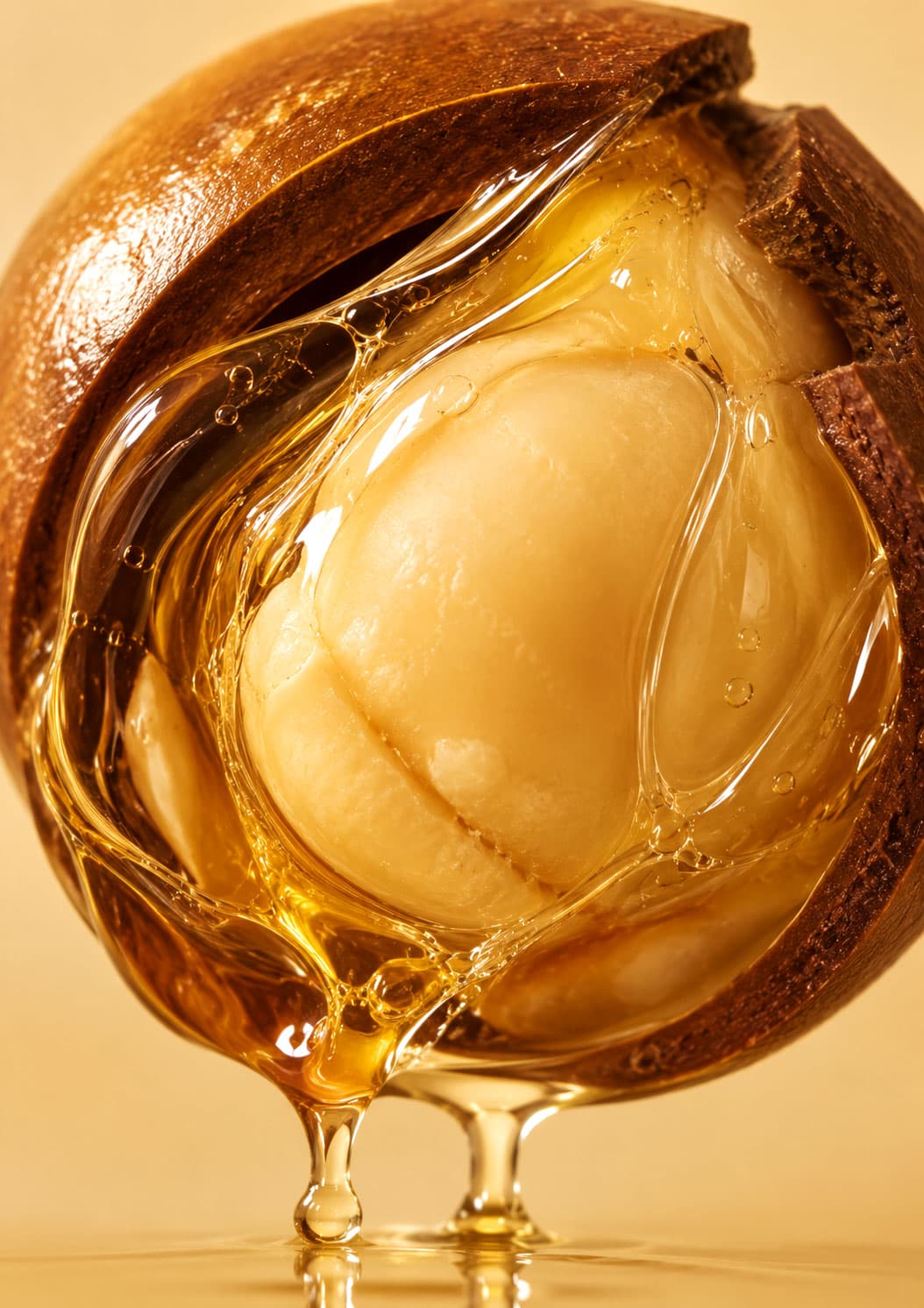
It is not a desert plant, and this Atlas does not pretend otherwise. It is here because it is the most abundant oil in both MARU body oils, and because where an ingredient is grown matters as much as where its species evolved. The shaded area marks orchard country, not a native range.[26][27]
Across 15 cultivars in one study, oleic acid made up 61.7 to 66.5% of fatty acids and palmitoleic acid 13.2 to 17.6%. That palmitoleic share, an omega-7 fatty acid uncommon in plant oils, is what sets macadamia apart from the other oils in this Atlas.[29]
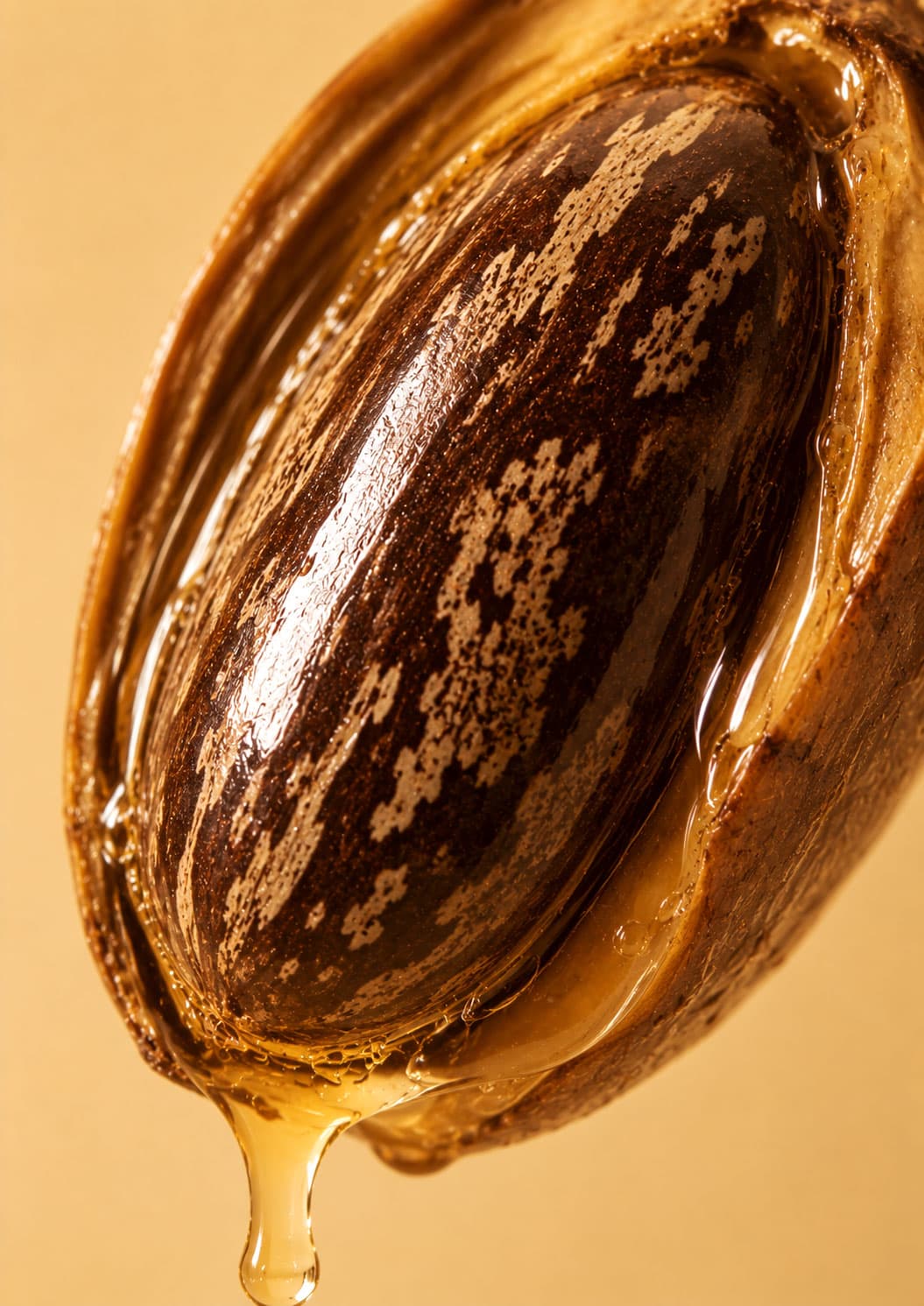
In South Africa the castor-oil plant is listed as a Category 2 invasive species under the 2020 Alien and Invasive Species Lists, which means it may be grown only under permit. An origin on the continent does not make a plant welcome everywhere on it.[34]
Ricinoleic acid, a hydroxy fatty acid almost unique to castor, makes up roughly 85 to 90% of the oil, with reported samples ranging from about 75 to 90% by origin. That single acid gives the oil its viscosity and its distinctive, cushioning feel.[35][36]